%201.png)
%201.png)
How to Travel to Antarctica from Patagonia: Complete Guide 2026
- Apr 8
- 9 min read
Updated: Apr 14


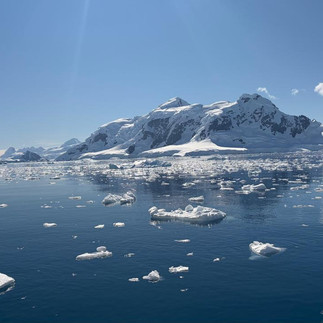
Antarctica is not a destination you improvise. From Patagonia, there are several ways to get there and each one involves completely different logistical decisions, timeframes, and experiences. Punta Arenas, Puerto Natales, and Ushuaia are the three cities where the adventure begins. This article breaks down the real options you have for traveling to the white continent from each one, with the practical information you need to consider before booking.
Punta Arenas: The Air Gateway to Antarctica

Punta Arenas is the capital of the Magallanes Region, at the southernmost tip of Chile. Arriving here is already an experience in itself a city with its own character, authentic Patagonian cuisine, and an identity forged between the Strait of Magellan and the winds of the end of the world. If you plan your trip well, you can combine your Antarctic expedition with Torres del Paine, the Strait of Magellan, Magdalena Island with its Magellanic penguin colonies, and much more. It is one of the most comfortable and complete options for reaching Antarctica.
Punta Arenas is also home to the Chilean Antarctic Institute (INACH), the government body dedicated to scientific research in Antarctica. Its presence in the city confirms Chile's commitment to Antarctic development and positions Punta Arenas as a world reference center in this field.
Punta Arenas offers three travel formats that either bypass the Drake Passage or access the interior of the Antarctic continent directly.
Fly-Cruise (Flight + Navigation)
You fly two hours to King George Island in the South Shetland Islands, where you board an expedition ship that explores the main highlights of the Antarctic Peninsula while keeping all the comforts of on-board life. You completely avoid both Drake Passage crossings, which can add up to four days of unpredictable sailing round-trip.
Depending on the program, you sail four to six days along the Peninsula and return by flight to Punta Arenas. The complete trip ranges from six to ten days a comfortable, safe option that lets you make the most of every day on the white continent. It is also the preferred choice for travelers who are sensitive to sea motion.
Flights depend on weather conditions at King George Island. If conditions don't allow takeoff or landing, delays of 24 to 48 hours are possible. For this reason, you should arrive in Punta Arenas at least two or three days before your scheduled flight and keep flexibility in the days that follow.
Full Day Antarctica (Same-Day Return)
This option lets you set foot on Antarctica and return to Punta Arenas the same day. You fly early to King George Island and spend four to six hours exploring the island's main highlights.
It works very well for travelers with limited time whose priority is experiencing Antarctica without committing a full week. You walk around the scientific bases, can see penguins in nearby colonies, and receive the official certificate confirming you have stood on the white continent. Some versions include a short kayak session if conditions allow.
Like the fly-cruise, it depends entirely on weather. Flights can be cancelled or delayed without notice.
Union Glacier (Antarctic Interior)
Union Glacier hosts a private camp in the Ellsworth Mountains, deep in the interior of the continent. This is not the Antarctic Peninsula, we are talking about the heart of the continent, where expeditions to Mount Vinson (Antarctica's highest peak, 4,892 meters), the South Pole, and other extreme mountaineering challenges are organized.
You fly approximately four hours and fifteen minutes from Punta Arenas directly to the glacier, where a fully equipped camp awaits. From there, smaller aircraft (Twin Otter, Basler) transfer you to your expedition departure points.
The profile of those who come here is varied mountaineers seeking to summit Mount Vinson or complete the Seven Summits, skiers aiming to reach the South Pole, and those seeking completely exclusive experiences in the deep interior of the continent. This is not conventional tourism, it is real expedition travel in one of the most remote places on Earth.
It operates only between November and January. Logistical coordination is complex and must be planned months in advance.
Puerto Natales: Fly-Cruise with Torres del Paine

Puerto Natales offers the same fly-cruise format as Punta Arenas, but with one clear advantage the city is the natural starting point for Torres del Paine, one of the most spectacular national parks in the world. If your trip includes Chilean Patagonia before or after Antarctica, departing from Natales simplifies the logistics no need to travel to Punta Arenas.
The Fly-Cruise Logistics from Natales
You fly two hours from Puerto Natales to King George Island, board directly onto the Antarctic Peninsula, sail four to seven days, and return by flight to Natales. Just like from Punta Arenas, you avoid the Drake by air. Arrive with two or three days of margin before your scheduled flight.
The Character of Puerto Natales
Puerto Natales is a city that surprises. During the season it receives visitors from around the world, and its hotel and dining offerings are comparable and in some respects superior to those of larger cities in the region. That blend of human scale with genuine cosmopolitanism is what makes it attractive as a base before an Antarctic expedition. And its proximity to Torres del Paine makes it a destination in its own right, not just a transit point.
Ushuaia: The Capital of Antarctic Expeditions

Ushuaia is the main departure point for Antarctica from South America. Multiple cruise lines operate regular departures from its port throughout the season, making it the city with the greatest diversity of options, frequencies, and price points in the Antarctic circuit. From here you sail the complete Drake Passage approximately 1,000 kilometers of open ocean between South America and the Antarctic Peninsula.
Available formats are varied. There are scenic-only expeditions where you sail among icebergs and spot wildlife without landing, expeditions with zodiac landings on shore, and specialized programs that include activities such as kayaking among icebergs, camping on ice, or wildlife photography. Each format has a different traveler profile and price range, from more accessible options to luxury expeditions. That breadth is precisely what makes Ushuaia the most versatile departure point of all.
Full Drake Crossing (The Classic)
The traditional Antarctic expedition experience — you board in Ushuaia, sail two days crossing the Drake heading south, spend four to seven days exploring the Antarctic Peninsula, and sail two days back. The complete trip takes between nine and fourteen days.
Crossing the Drake is an integral part of the classic Antarctic experience. It gives you a real sense of isolation — you leave all connection behind, cross one of the wildest oceans on the planet, and arrive at the white continent after two days of sailing that mentally prepare you for what lies ahead.
It can be as calm as a lake (Drake Lake) or present waves of 8 to 12 meters (Drake Shake). There is no way to predict with certainty what you will encounter, although weather forecasts give some indication three or four days in advance. If you are prone to seasickness, consult your doctor before the trip and bring appropriate medication for ocean navigation.
The crossing is not just empty ocean. Wandering albatrosses, petrels, and other seabirds accompany the ship. With luck, you may spot whales or dolphins. Naturalist guides give talks during the crossing about what you will see in Antarctica, so the days on the Drake are part of the preparation.
Less Common Variants from Ushuaia
For small groups seeking a more intimate experience and fewer people at each landing, expeditions operate on smaller, more personalized vessels sailboats or motor yachts with limited capacity. These trips offer itinerary flexibility and a completely different atmosphere from larger ships.
If you are considering this option, there is one critical point you must verify before booking every vessel operating in Antarctica must hold official authorization from the operator's country of origin or the vessel's flag state. An Argentine or Chilean departure permit alone is not sufficient. Always ask about the corresponding authorizations operating without them is not only illegal but can compromise your safety in one of the most remote areas on the planet.
Some expeditions focus specifically on wildlife photography, kayaking among icebergs, or skiing on Antarctic slopes. If you have a specific interest and the appropriate technical level, these expeditions maximize the time dedicated to that activity. They require planning well in advance as spots are very limited.
Puerto Williams: The Future Antarctic Gateway

Puerto Williams is the southernmost city in the world, further south than Ushuaia and is emerging strongly as a new gateway to Antarctica. Located on the shores of the Beagle Channel, surrounded by native forests and with views of the Patagonian mountains, the city has a natural beauty that justifies the visit on its own.
Direct flights currently operate to Puerto Williams, from where it is possible to board a luxury expedition cruise round-trip to Antarctica. New investments in hotel infrastructure and connectivity are consolidating Williams as a real departure point, making the journey more direct and comfortable for those who choose this route.
Puerto Williams has something no other gateway city can offer, it is the closest inhabited point to the Antarctic continent on the entire planet. That geographical fact, combined with its pristine natural surroundings and the investments arriving, position it as the Antarctic hub of the future, a destination worth keeping on your radar right now.
Operational Tips That Matter


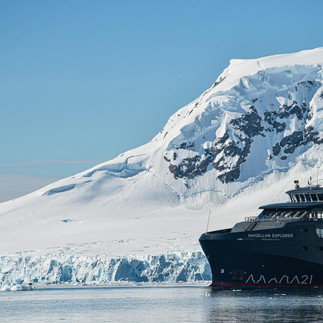
Timing and Weather Contingencies
Arrive early. No matter where you depart from, land a minimum of three or four days before your embarkation or flight date. Weather in Antarctica and Patagonia does not respect itineraries. I have seen flights delayed between 48 and 72 hours, and sailings that departed a day late because Drake conditions were not safe to set out.
If you have an international return flight scheduled right after your expedition, you are running a high risk of missing it. Operators include contingency days, but they are not always enough. Leave margin, especially on the return side.
Equipment
Operators provide suggested equipment lists, but each one includes different items. Some provide standard expedition gear, waterproof Muck-style boots, and trekking poles. Others provide the basics , or nothing at all. That is why it is essential to clarify what each operator includes when choosing a program.
What you always need: base layer (merino wool or technical synthetic), mid layer (fleece or softshell), insulated parka, hats that cover your ears (bring two for rotation), gloves (one lightweight pair and one thick waterproof pair), sunglasses with high UV protection, and sunscreen SPF 50 or higher for your face.
Transparency About What Your Expedition Includes
Some operators offer packages described as all-inclusive, but the details matter. There are scenic-only cruises, expeditions that include some shore excursions, and fully equipped programs. Before confirming your booking, review exactly what the price covers medical evacuation insurance, crew gratuities, onboard beverages, and coverage in case of weather delays that extend your time in the city.
A serious operator answers these questions without discomfort. If the answers are vague, that is information you need before committing.
Sustainability
Antarctica is one of the most fragile ecosystems on the planet, and its preservation depends on every decision we make as travelers. Choosing operators with demonstrated sustainable practices is not just an ethical preference, it is the concrete way each expedition contributes to keeping this place as we know it.
When choosing your operator, look for verifiable signals that their commitment to Antarctica goes beyond words. Every time a traveler chooses a responsible operator, they strengthen a chain that protects this continent season after season.
On-the-Ground Coordination Services
If you are arriving in Punta Arenas, Puerto Natales, Ushuaia, or Puerto Williams and need to coordinate last-minute equipment, specific transportation, or any particular logistical requirement, consider a local concierge service. We coordinate everything from pre and post-expedition accommodation to specialized equipment management. If you need something specific, contact us and we will have it ready when you arrive.
Frequently Asked Questions: How to Travel to Antarctica
How far in advance should I arrive before embarking for Antarctica? We recommend a minimum of three to four days in advance. Weather can delay flights or departures by 48 to 72 hours.
Which city is best for traveling to Antarctica? It depends on your preferred format. Ushuaia offers the greatest diversity of options and frequencies. Punta Arenas concentrates the fly-cruises and flights to the interior continent. Puerto Natales works well if you want to combine Torres del Paine with Antarctica. Puerto Williams is emerging as the gateway of the future — the southernmost inhabited point on the planet.
Can I go to Antarctica without crossing the Drake? Yes. The fly-cruise formats from Punta Arenas and Puerto Natales completely avoid the Drake Passage. You fly to King George Island and board directly onto the Antarctic Peninsula.
What equipment do I need? It depends on the operator, so always ask first what they include. The bare minimum: merino wool base layer, hats, gloves, sunglasses with high UV protection, and sunscreen SPF 50 or higher.
When is the best season? The season runs from November to March. December, January, and February offer the most stable weather and maximum wildlife activity. November and March have fewer people but more variable weather.
How rough is the Drake Passage? Variable. It can be calm (Drake Lake) or present waves of 8 to 12 meters (Drake Shake). If you are prone to seasickness, consult your doctor before the trip and bring appropriate medication for ocean navigation.
Final Reflection

Antarctica is the last truly pristine place on the planet. Every format, fly-cruise, full Drake crossing, Full Day, or Union Glacier, offers completely different timeframes, logistics, and experiences, but with one single goal in common: connecting you with the most impressive place on Earth, where nature manifests itself at its peak and beauty exists in its purest and simplest form.
I recommend taking extra time to explore Patagonia before or after your expedition, this end of the world has much more to offer. Plan and organize carefully, weather conditions change constantly, and flexibility is not optional, it is part of the journey.
Antarctica rewards preparation and punishes improvisation.
If you have specific questions about logistical coordination in the region, write to us at contacto@antarticalogistica.com
Carlos Millan A.
Fundador Antartica Logistica
I think this is the first full comprehensive guide I've seen regarding travel and expeditions to the Antarctic continent.
Personally, I was aware of the flight and/or cruise options, but I didn't know there was a combined option, and it seems perfect to me.
From Australia the options are very long, expensive and apparently there is also a greater impact on the Antarctic experience.
See you in a few months.
Thanks.